
Table of Contents (18 sections)
7 Best Influencer Marketing Platforms for Dropshipping Stores in 2026
Influencer marketing works for dropshipping the same way it works for any other ecommerce business: a creator with a genuinely engaged, niche-relevant audience can move products a cold ad never would, because the recommendation arrives inside content the viewer already trusts. The harder problem is finding that creator among millions of accounts, then telling the difference between one whose audience is real and one whose follower count is inflated with bots.
That is the actual job an influencer marketing platform does. It is not magic and it is not optional software, it is a searchable database of creators plus the audience-quality data you would otherwise have to piece together by hand, account by account. The right platform for a five-figure Shopify store looks nothing like the right platform for a venture-funded DTC brand, and the tool landscape has shifted substantially since this topic was last widely covered. Several once-popular options have been acquired, folded into unrelated products, or quietly stopped functioning as standalone influencer marketplaces. This guide covers what is actually still operating, actually still relevant to a dropshipping budget, and actually verified against each platform's own current documentation as of August 2026.
What an influencer marketing platform actually does
Strip away the marketing language and every platform in this category does some combination of four things: it lets you search a database of creators by niche, platform, and audience size; it shows you audience-quality data (real followers versus bots, engagement rate, demographic fit) so you are not guessing; it manages outreach, product seeding, and payment so you are not doing it over email and spreadsheets; and, for the ecommerce-native tools, it connects a creator's affiliate link or discount code directly to your store's sales data so you can see which partnerships actually paid for themselves.
Not every platform on this list does all four. Some are narrow and cheap on purpose. Matching the tool to what you actually need, rather than picking whichever one shows up first in search results, is most of the decision.
The 7 platforms, grouped by what they are actually built for
| Platform | Best for | Cost signal | Ecommerce-native tracking |
|---|---|---|---|
| Shopify Collabs | Shopify stores just starting out | Free to install, 2.9% fee on commission payouts | Yes, built into Shopify |
| Modash | Self-serve mid-market programs | Reported ~$199-$299/mo, tiered | Yes, Shopify-native on every tier |
| Upfluence | Larger programs needing full CRM + payouts | Custom-quoted, modular | Yes, Shopify/WooCommerce/Magento/BigCommerce/Amazon |
| Grin | High-budget, dedicated influencer teams | Reported ~$25k-$40k/year | Yes, ecommerce-first design |
| TikTok Creator Marketplace / TikTok One | TikTok-first campaigns with mid-tier+ creators | Free to use; you pay creators directly | No, platform-native discovery only |
| HypeAuditor | Auditing a shortlist before you commit | Reported ~$299-$399/mo+ | No, audience-verification tool |
| Shoutcart | Low-budget, one-off test posts | Pay per shoutout, no contract | No, transactional marketplace |
Already built into your store: Shopify Collabs
Shopify Collabs is Shopify's own affiliate and creator app, and for a store that is already running on Shopify it is the obvious starting point before paying for anything else. It is free to install on the Shopify, Advanced, or Shopify Plus plans; Shopify charges a 2.9% payment processing fee on the commission payouts you owe creators, and that is the only platform cost. Merchants can search Shopify's creator database, invite people they already work with directly, generate affiliate links and discount codes, and pay commissions automatically through the same billing system that already runs your store, with no separate payout tool to reconcile.
The tradeoff is reach and control. Collabs draws from creators who have opted into Shopify's own network, which is a smaller and less filterable pool than a dedicated discovery platform, and the open-access "no approval needed" mode trades vetting for speed. For a store still deciding whether influencer marketing is worth the effort at all, that tradeoff is usually the right one to start with: there is no separate contract, no minimum spend, and nothing to cancel if it does not work out.
Ecommerce-native discovery with real budget behind it: Upfluence and Modash
Upfluence and Modash occupy a similar space: both search across a large creator database, both connect directly to Shopify (and other carts) for gifting, discount-code tracking, and sales attribution, and both are built for a brand running an actual program rather than a one-off shoutout.
Upfluence's own pricing page describes a modular, custom-quoted structure: you pay a fixed platform fee for the modules you use (creator search, program management, or payments), never a percentage of the sales creators drive, across a database Upfluence lists at 14 million-plus creators with native integrations for Shopify, WooCommerce, Magento, BigCommerce, and Amazon. Upfluence does not publish flat dollar figures and requires a sales call to get a quote, and third-party reporting on actual invoices places most active programs somewhere in the several-hundred-to-low-thousands-per-month range depending on modules and team size, with a standard 12-month commitment.
Modash is the more self-serve, budget-transparent option of the two, with a published Essentials plan reported at roughly $199 to $299 a month depending on annual or monthly billing, scaling up through Performance and Enterprise tiers. It searches a reported 350 million-plus creator profiles across Instagram, TikTok, and YouTube, includes Shopify integration across every tier rather than gating it behind the top plan, and adds automatic content tracking so a campaign's actual posts get logged without you manually checking each creator's account.
For a store past the experimentation stage but not yet running a six-figure influencer budget, Modash is usually the easier entry point; Upfluence earns its cost once a program is large enough to need dedicated affiliate CRM, multi-channel outreach automation, and payout infrastructure in one place.
Built for scale, priced for it too: Grin
Grin markets itself specifically as a creator management platform built for ecommerce rather than a general marketing tool with influencer features bolted on, and its Shopify integration is consistently the most cited reason brands choose it. Grin does not publish pricing, and third-party reporting on actual contracts puts its Core plan in the neighborhood of $25,000 to $40,000 a year, sold on an annual commitment with monthly payment options.
That price point puts Grin out of reach for most single-product or early-stage dropshipping stores. It makes sense once a brand is running influencer marketing as a core, sustained acquisition channel with a dedicated team managing dozens or hundreds of creator relationships at once, not for testing whether influencer marketing works in the first place.
Native to the platform your customers are already scrolling: TikTok Creator Marketplace
TikTok's own creator-brand matchmaking tool, historically called the TikTok Creator Marketplace and now being folded into the broader TikTok One hub alongside TikTok's ad tools, lets you search creators by location, category, follower count, and recent performance, then reach out directly inside the platform. Because it is TikTok's own tool, the audience data comes straight from the platform rather than a third party's estimate, which removes one layer of uncertainty that outside tools cannot fully close.
Creator eligibility has real thresholds worth knowing before you plan a campaign around it: a creator generally needs at least 10,000 followers, at least 100,000 likes across the previous 28 days, and at least three posts in that same window to appear in the marketplace at all. That filters out true micro-influencers, who are often the better fit for a niche dropshipping product, so treat this as the tool for mid-tier and above TikTok creators specifically, not a complete solution on its own. Instagram and Meta run an equivalent, more limited Brand Collabs Manager for US-based creators, plus Partnership Ads that let a brand boost a creator's existing post as a paid ad from the brand's own account; worth knowing about if Instagram carries more of your traffic than TikTok does.
The audience-verification layer: HypeAuditor
HypeAuditor is not primarily a discovery tool, it is a verification tool, and it earns a spot on this list because the single most expensive mistake in influencer marketing is paying a creator whose "engaged audience" is substantially fake followers. HypeAuditor searches Instagram, YouTube, and TikTok profiles and returns an audience-quality score built from the ratio of real to suspicious followers, engagement authenticity, growth-pattern anomalies, and demographic breakdowns, which is exactly the audit step a lot of first-time dropshipping sellers skip before sending free product to a stranger.
Pricing is not public; third-party reporting puts entry plans somewhere around $299 to $399 a month, which is a real cost for a small store. The way to use HypeAuditor efficiently on a limited budget is not as your primary search tool but as the vetting step you run on a short list of three or four creators you already found through Shopify Collabs, TikTok's marketplace, or manual outreach, before you commit product or payment to any of them.
Low commitment, transactional, and still operating: Shoutcart
Shoutcart has been running since 2016 and, unlike several of its 2020-era competitors, is still an active marketplace in 2026: brands browse creator listings by category, audience size, and price, then buy a single post directly with no contract, no minimum spend, and no onboarding call. It works across Instagram, TikTok, YouTube, Facebook, and X.
This is the closest thing on this list to a true test-the-waters option. A single Shoutcart post will not build a lasting creator relationship the way a Grin or Upfluence program does, and audience-quality vetting is entirely on you, but it is a reasonable way to see whether a specific product resonates with a specific creator's audience before committing to anything bigger.
What happened to the influencer platforms everyone used to recommend
Several tools that circulate in older influencer-marketing roundups are no longer good recommendations, and it is worth knowing why so you do not waste time chasing a tool that no longer does what an old article says it does. TapInfluence was acquired by IZEA back in 2018 and stopped operating as a standalone platform, with its technology folded into IZEA's own IZEAx product. Socialbakers rebranded to Emplifi after merging with Astute Solutions and repositioned around enterprise social media management and customer experience rather than influencer discovery for smaller brands. TweetDeck became X Pro, a paid power-user timeline tool for X, not a cross-platform influencer search engine, and X carries a small fraction of the video-first influencer activity that TikTok and Instagram do for most dropshipping niches. GroupHigh and Influence.co both still show up in search results, but neither publishes evidence of an active, ecommerce-oriented offering comparable to the platforms above, and a listicle recommending a stale or thinly maintained tool does a reader more harm than good. AllTop and Podbay.fm were never dedicated influencer marketing platforms to begin with, they are a news aggregator and a podcast directory respectively, and the manual workaround of searching them for creators does not hold up against a purpose-built search tool at 2026's scale.
How to evaluate a creator before you pay them or send product
A platform gets you to a shortlist. It does not replace the actual evaluation, which comes down to five checks regardless of which tool surfaced the creator. A 20,000-follower account in your exact niche usually outperforms a 200,000-follower general lifestyle account for a specific product, and an account with a large but silent following is a weak bet no matter how big the number looks.

Before any of that, the product itself needs to be worth promoting. Sending free product to a well-vetted creator does not fix a product with weak underlying demand or margin that cannot absorb a commission; running it through Dropmind's product research framework or checking it against Winning Products first tells you whether it is worth the outreach effort at all.
Common mistakes stores make with influencer platforms
- Skipping the disclosure requirement. The FTC's Endorsement Guides require creators to clearly disclose a paid or gifted partnership, and the brand shares responsibility for making sure that happens. A platform that manages the relationship does not automatically handle this for you; confirm the disclosure language before a post goes live, not after.
- Judging a platform's whole database by one bad match. Every discovery tool, including the ones above, returns some creators whose data looks better than their actual performance. One disappointing result is a reason to refine the search filters, not to abandon the tool after a single test.
- Treating follower count as the only filter. A platform that lets you sort by follower count first will bias you toward exactly the vanity-metric mistake these tools exist to prevent. Sort by engagement or audience-quality score when the option exists.
- No written agreement on usage rights. Decide upfront whether you can reuse the creator's content as a paid ad, and for how long, before the campaign runs. Renegotiating usage rights after content already performed well is a weaker position than agreeing to it in advance.
- Paying flat fees for every partnership by default. An affiliate or commission structure, which most of the platforms above support natively, ties cost directly to results and is usually the lower-risk starting structure for a store that has not worked with a given creator before.
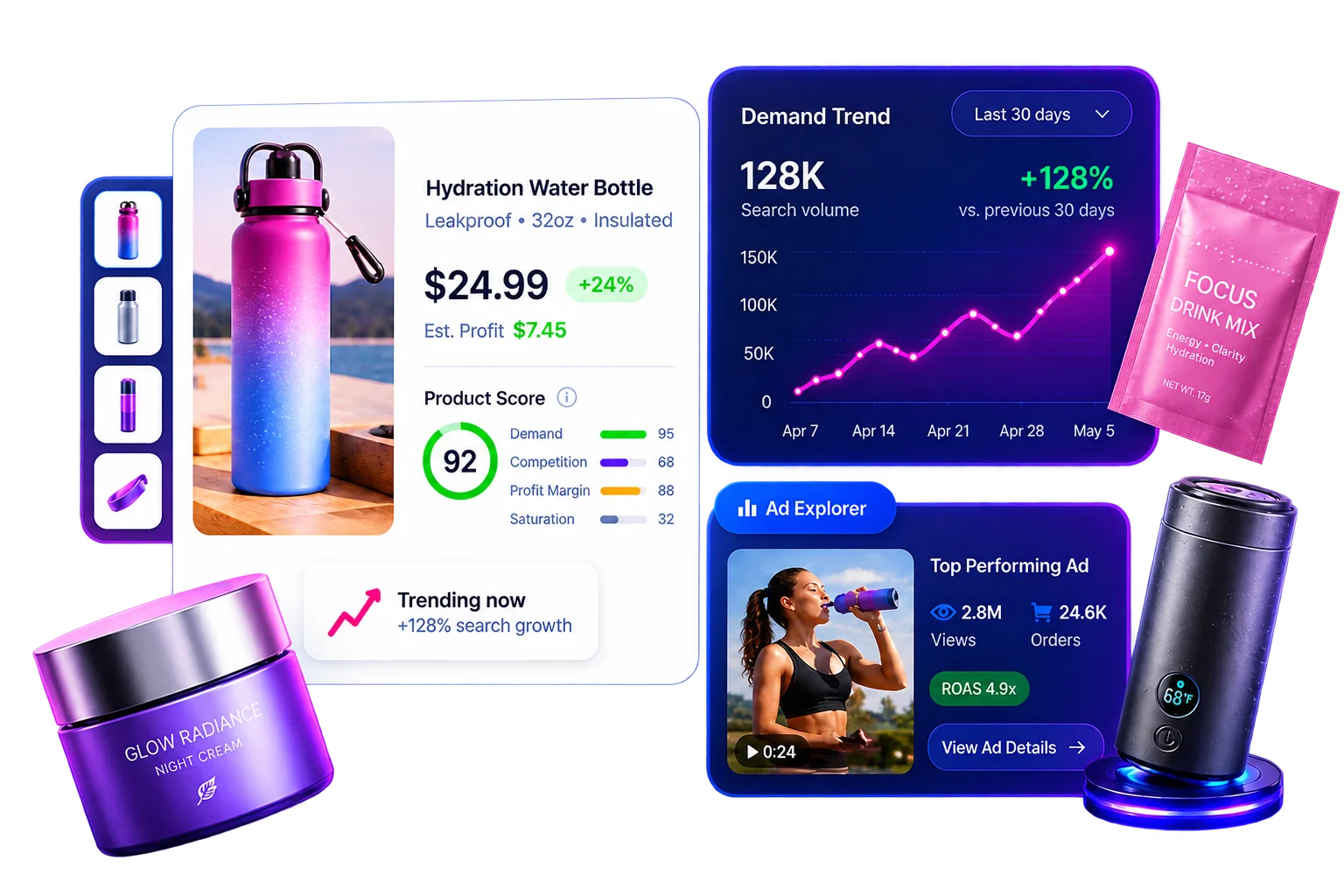
Once a partnership starts producing content that actually converts, that same content is worth studying, not just running once and forgetting. Dropmind's Ads Explorer is built for exactly that kind of research: seeing which creator-style or UGC ad formats are already gaining traction in a niche before you brief a new creator, rather than guessing at a creative direction from scratch. For channel-specific tactics once you have a partnership running, Dropmind's Instagram marketing playbook and YouTube marketing playbook cover the posting and ad mechanics on each platform in more depth than a discovery tool alone will.
Frequently asked questions
Do I need a paid platform to start influencer marketing for my store?
No. If you already run on Shopify, Shopify Collabs is free to install and covers discovery, product seeding, affiliate links, and automated payouts for no cost beyond the standard 2.9% payment processing fee on commissions. Manual outreach through TikTok or Instagram's own creator tools is also free; it just takes more of your own time to vet each account.
What is the actual difference between Modash and Upfluence?
Modash publishes transparent, tiered pricing starting in the low hundreds of dollars a month and is built for self-serve use; Upfluence is custom-quoted, requires a sales call, and is built around a broader set of modules including payment infrastructure and multi-channel outreach automation. Both connect natively to Shopify and similar carts for sales attribution.
Is Grin worth it for a small dropshipping store?
Usually not. Grin's reported pricing sits in the tens of thousands of dollars annually, which only makes sense once influencer marketing is a proven, sustained acquisition channel with a dedicated team running it, not while a store is still testing whether the channel works at all.
How do I know if an influencer's followers are real?
A dedicated audit tool like HypeAuditor is the most reliable check, scoring the ratio of real to suspicious followers along with engagement authenticity and growth patterns. Short of that, a manual check of whether comments look genuine and specific, rather than generic and repetitive, is a rough but free substitute.
Are TapInfluence, SocialBakers, or TweetDeck still usable for finding influencers?
Not in the way older articles describe them. TapInfluence stopped operating as a standalone platform after its 2018 acquisition by IZEA, SocialBakers rebranded to Emplifi and moved toward enterprise social media management rather than influencer discovery, and TweetDeck became X Pro, a paid timeline tool with no dedicated influencer search function.
The bottom line
Start with what you already have access to. If you run on Shopify, Shopify Collabs costs nothing to try and covers the basics well enough to learn whether a given product and creator type actually converts. Add Modash or Upfluence once you need a larger discovery pool and real Shopify-native attribution, use TikTok's own marketplace when a campaign is specifically built around TikTok creators, and treat HypeAuditor as the audit step on your shortlist rather than your primary search tool. Grin is worth the cost only once influencer marketing has already proven itself as a channel worth running at scale. The tool matters less than the discipline of actually checking audience quality, confirming disclosure, and agreeing on usage rights before a single dollar or unit of free product goes out the door.